The Search Revolution: Navigating Google’s Massive 2026 Algorithm Updates
The landscape of digital marketing and search engine optimization has undergone a seismic shift in the first half of 2026. If 2024 and 2025 were the years of “AI experimentation,” 2026 is officially the year of AI enforcement and authority. Between the unprecedented volatility of the March 2026 Broad Core Update and the integration of Gemini 4.0 into the search stack, Google has fundamentally changed what it takes to rank.
For website owners and content creators, the message is clear: the days of “gaming the system” are over. Google’s systems are now sophisticated enough to distinguish between genuine expertise and thin, AI-generated fillers at scale.
1. The March 2026 Broad Core Update: A Masterclass in Volatility
On March 27, 2026, Google initiated what industry experts are calling the most disruptive core update in nearly a decade. While core updates typically take two weeks to roll out, the March 2026 update saw nearly 80% of top-three search results shift within the first 10 days.
Information Gain: The New Gold Standard
The single most important technical shift in this update is the elevation of “Information Gain” as a primary ranking signal. Google is no longer just looking for the best answer; it is looking for the newest value.
- The Penalty for Parroting: Sites that simply rehash existing top-ranking articles—even if well-written—have seen massive traffic declines.
- The Reward for Originality: Google now explicitly rewards pages that contribute unique data, first-hand case studies, or proprietary insights that don’t exist elsewhere on the web.
The Death of “Parasitic SEO”
For years, marketers used “Parasitic SEO” (hosting low-quality promotional content on high-authority domains like Outlook India or Forbes) to rank quickly. The March 2026 update implemented a page-level authority decoupling. Google’s AI now evaluates the quality of an individual page independently of the domain’s overall trust. High-authority domains no longer serve as a “shield” for weak content.
2. Gemini 3 & 4.0: The Brain Behind the Search
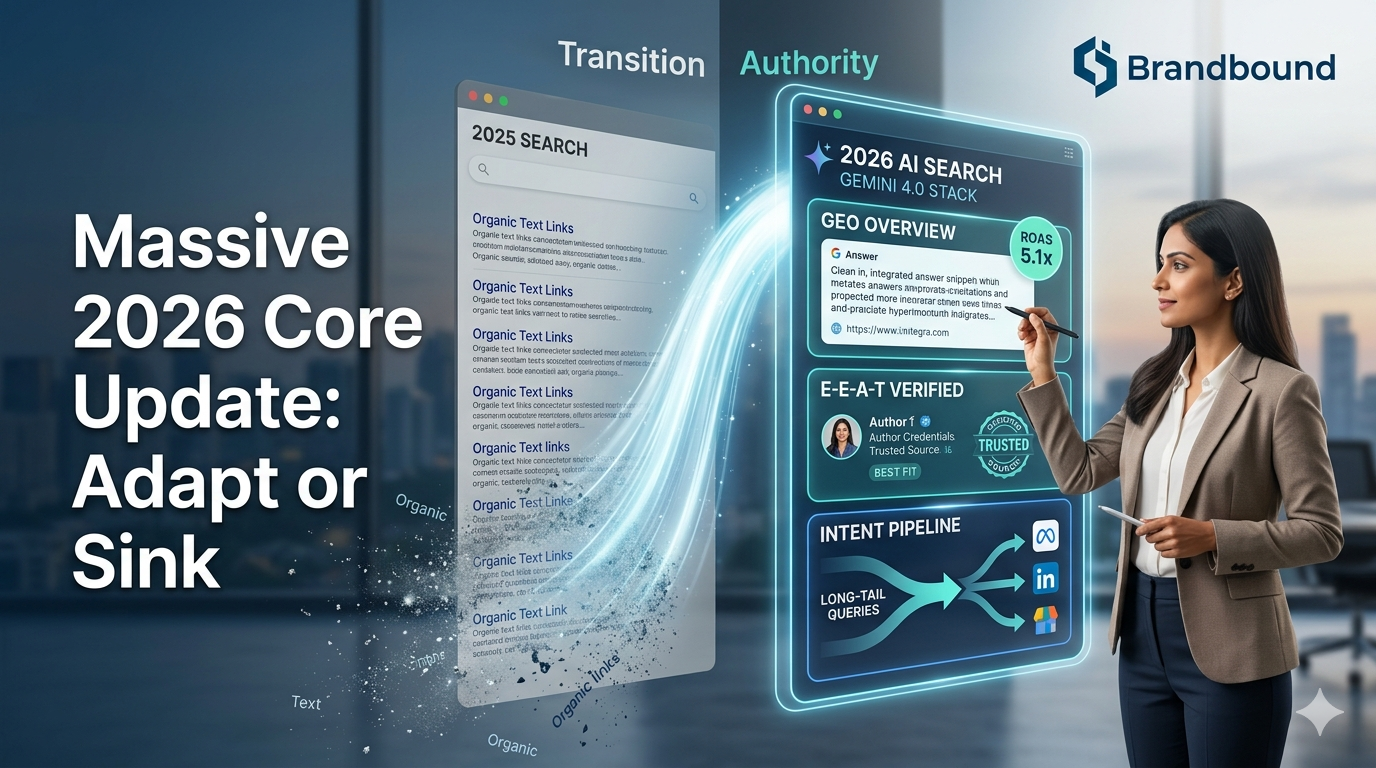
In early 2026, Google upgraded its AI Overviews and semantic filters to run on Gemini 4.0. This isn’t just a chatbot update; it is a total rewiring of how Google understands user intent.
The Semantic Filter
The new Gemini-powered filter is designed to identify “Fluency without Depth.” Many AI tools can produce content that sounds professional but lacks substance. Google’s 2026 update uses semantic analysis to detect whether a writer (human or AI) actually understands the nuances of a topic or is just predicting the next likely word.
AI Mode in Chrome
In April 2026, Google introduced “AI Mode” in Chrome, allowing users to transition seamlessly from a standard Google search into a continuous conversation with Gemini.
- SEO Impact: Being cited in an AI Overview is now more valuable than ranking #1 in organic results. To be cited, your content must be structured in a “Q&A” or “Direct Answer” format that the AI can easily synthesize.
3. Stricter E-E-A-T and YMYL Requirements
Experience, Expertise, Authoritativeness, and Trustworthiness (E-E-A-T) are no longer just “nice-to-have” guidelines—they are hard-coded requirements, especially for Your Money or Your Life (YMYL) topics like finance, health, and law.
The “Human Premium”
Data from the April 2026 audits shows that 73% of top-ranking pages in competitive niches now feature clear author credentials, linked LinkedIn profiles, and verifiable “real-world” experience.
- Anonymous content is plummeting. * Niche specialists are winning over generalist blogs. A blog that covers “Digital Marketing, Cooking, and Travel” will struggle to rank against a site that focuses 100% on “Technical SEO for SaaS.”
4. Technical Performance: The “Back Button Hijacking” Policy
In mid-April 2026, Google added a new specific violation to its spam policies: Back Button Hijacking. This refers to the deceptive practice where a website prevents a user from returning to the search results by refreshing the page or redirecting them when they hit “back.”
- The Penalty: Sites found using this tactic face immediate algorithmic demotion or manual action.
- The Goal: Google is prioritizing User Agency. If a user wants to leave your site, letting them do so without friction is now a ranking factor.
Core Web Vitals: INP is the King
While LCP (Largest Contentful Paint) remains important, INP (Interaction to Next Paint) has become the primary technical metric in 2026. Google is focusing on how “snappy” a website feels. If your mobile site has a high INP (over 200ms), you are likely losing ground to faster, leaner competitors.
5. How to Survive and Thrive in the Post-2026 Search Era
To maintain visibility in this new “Trust-First” ecosystem, businesses and creators must pivot their strategies immediately:
- Prioritize “Owned Data”: Instead of writing a “How-To” guide based on Google research, conduct a survey or run an experiment. Use your own findings as the hook.
- Audit for “Intent Match”: Use Google Search Console to see what queries are driving traffic. If you rank for “Best SEO Tools” but your page is just a list of links without a deep review, you will eventually be replaced by a page that provides an actual comparison.
- Humanize Your Brand: Move away from generic brand accounts. Highlight your founders, your lead engineers, and your actual experts. Give them author pages and encourage them to build their own topical authority.
- Optimize for AI Overviews (GEO): Structure your content with clear H2/H3 headers that mirror common questions. Use “Answer-First” formatting—provide the direct answer in the first paragraph, then expand with detail below.
- Clean Your “Content Debt”: If you have hundreds of old, thin blog posts that no longer provide value, prune them. In 2026, having “content bloat” on your site can actually drag down the rankings of your high-quality pages.
Conclusion: The Future is Helpful
Google’s 2026 updates represent a maturation of the search engine. It is no longer a librarian looking for keywords; it is an assistant looking for expertise. By focusing on deep, authoritative, and technically flawless content, you can bypass the “AI noise” and secure long-term visibility.
The goal for the rest of 2026 is simple: Don’t just be relevant—be indispensable.