In today’s competitive market, not all customers are equal. A small percentage of clients often generates the majority of revenue—these are your high-value clients. The challenge is identifying, targeting, and converting them efficiently. This is where Artificial Intelligence (AI) becomes a game-changer.
AI enables businesses to analyze massive datasets, predict behavior, personalize marketing, and optimize campaigns—helping you attract clients who are more likely to convert, spend more, and stay longer.
What Are High-Value Clients?
High-value clients are customers who:
- Generate higher revenue per transaction
- Have a longer lifetime value (LTV)
- Require less convincing to purchase
- Often become repeat buyers or brand advocates
Instead of targeting everyone, AI helps you focus on the right people.
1. Use AI for Customer Segmentation
AI tools can analyze your existing customer data and group users based on:
- Purchase behavior
- Demographics
- Browsing patterns
- Engagement levels
How it helps:
AI identifies patterns that humans might miss, allowing you to create micro-segments like:
- High spenders
- Frequent buyers
- Premium product users
Tools you can use:
- CRM platforms with AI (HubSpot, Salesforce)
- Google Analytics with predictive insights
2. Predict High-Value Customers Using AI Models
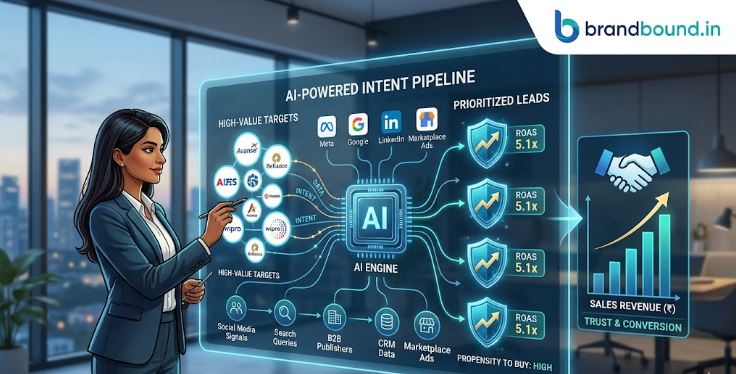
AI uses predictive analytics to determine which leads are most likely to become high-value clients.
What AI analyzes:
- Past purchase history
- Website interactions
- Ad engagement
- Time spent on key pages
Outcome:
You can assign a lead score, prioritizing prospects who are more likely to convert and spend more.
3. Personalize Marketing Campaigns at Scale
AI allows you to deliver highly personalized experiences.
Examples:
- Personalized email campaigns
- Dynamic website content
- Customized product recommendations
Why it works:
High-value clients expect relevance. AI ensures your messaging matches their intent.
4. Optimize Paid Ads for High-Value Audiences
AI-driven ad platforms (like Meta and Google Ads) can optimize campaigns for better ROI.
How:
- Identify users similar to your best customers (lookalike audiences)
- Automatically adjust bids for high-conversion users
- Focus budget on high-value segments
Result:
Lower cost per acquisition (CPA) and higher return on ad spend (ROAS)
5. Use AI Chatbots for Qualification
AI chatbots can:
- Engage visitors instantly
- Ask qualifying questions
- Filter out low-intent users
Benefit:
Your sales team spends time only on serious, high-value prospects
6. Analyze Customer Lifetime Value (LTV)
AI helps calculate and predict LTV based on:
- Purchase frequency
- Average order value
- Retention rate
Why it matters:
You can invest more in acquiring customers who will bring long-term revenue.
7. Content Personalization with AI
AI tools can generate and recommend content tailored to user preferences.
Examples:
- Blog recommendations
- Video suggestions
- Product guides
Impact:
Keeps high-value users engaged and moves them faster through the funnel.
Industry-Specific Examples
1. E-commerce (D2C Brands)
Problem:
Not all customers contribute equally to revenue.
AI Solution:
- Identify top 10% high spenders
- Create lookalike audiences
- Retarget users who abandoned high-value carts
Example:
An apparel brand uses AI to target users who frequently purchase premium collections, increasing average order value.
2. Real Estate
Problem:
Too many low-quality leads wasting sales team time.
AI Solution:
- Score leads based on budget, location preference, and behavior
- Prioritize high-budget buyers
Example:
AI identifies users browsing luxury properties multiple times and targets them with personalized offers.
3. B2B / SaaS
Problem:
Long sales cycles and low conversion rates.
AI Solution:
- Identify companies with high purchase intent
- Analyze firmographics (industry, company size, revenue)
Example:
A SaaS company targets mid-sized enterprises showing repeated engagement with pricing pages.
4. Healthcare & Clinics
Problem:
Attracting high-value patients (premium treatments)
AI Solution:
- Segment patients based on treatment interest
- Target users searching for specialized procedures
Example:
A dental clinic uses AI to target users interested in cosmetic dentistry rather than general checkups.
Best Practices for Using AI Effectively
- Start with clean data: AI is only as good as your data
- Define clear KPIs: Focus on LTV, ROAS, and conversion rates
- Test and optimize continuously
- Combine AI with human strategy for best results
Common Mistakes to Avoid
- Targeting too broad an audience
- Ignoring data privacy and compliance
- Over-relying on automation without strategy
- Not tracking performance metrics properly
Final Thoughts
AI is not just a tool—it’s a strategic advantage. By leveraging AI, you can move from mass marketing to precision targeting, ensuring your efforts focus on clients who truly matter.
Whether you’re in e-commerce, real estate, SaaS, or healthcare, the ability to identify and target high-value clients can dramatically improve your ROI and business growth.